Solana founder warns that Bitcoin is about to be cracked: it will collapse if it does not upgrade to quantum resistance before 2030
The founder of Solana warned that there is a 50% chance of quantum computing breakthrough within five years. If the Bitcoin community does not complete anti-quantum upgrades before 2030, security may be subverted
(Preliminary summary: Musk asked seriously: Can quantum computers crack Bitcoin?)
(Background supplement: Developers propose to freeze Satoshi Nakamoto’s 1 million Bitcoins, 3 steps to deal with the quantum computer crisis )
Contents of this article
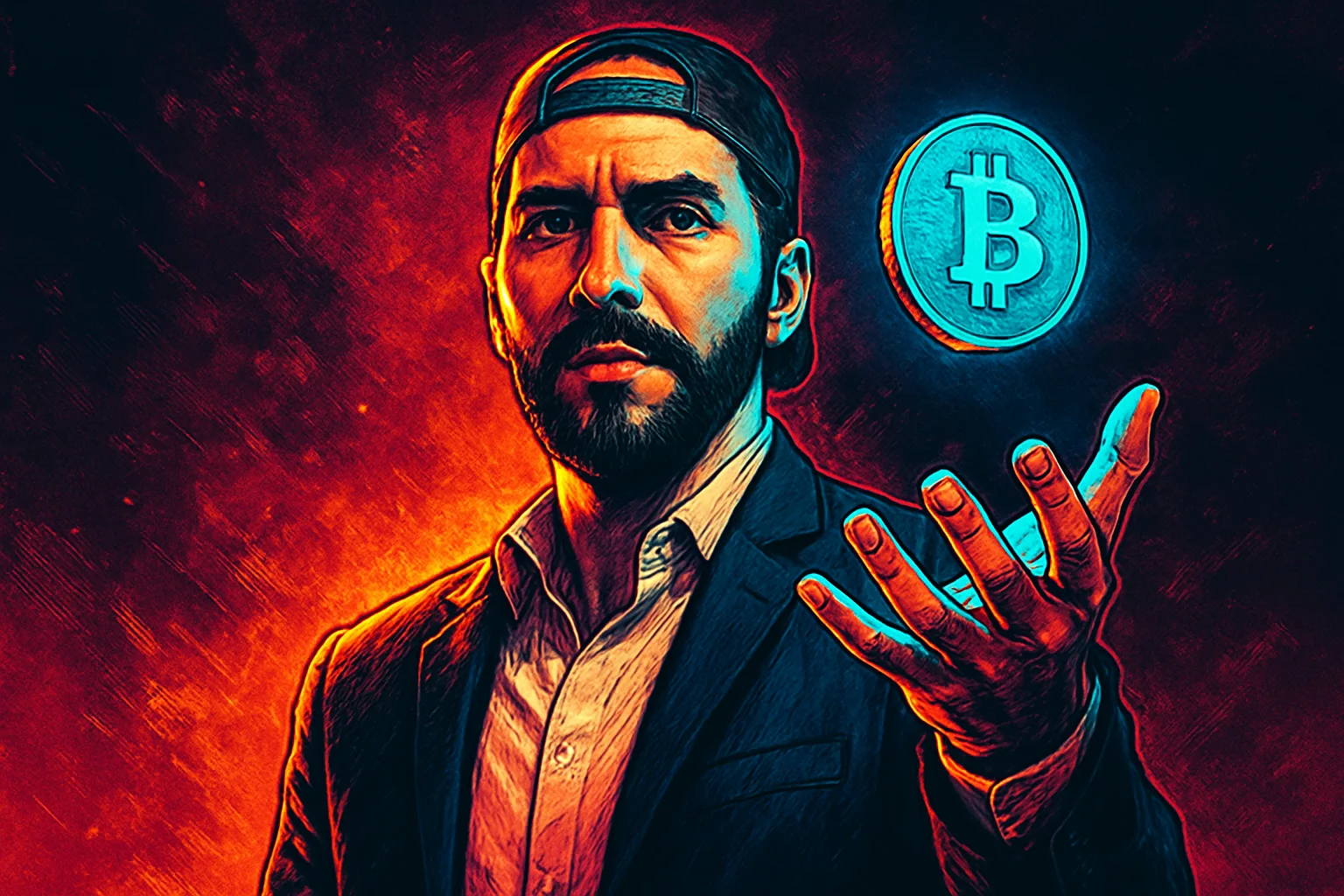
Fifteen years after the birth of the blockchain, the first quantum alarm officially sounded. Solana co-founder Anatoly Yakovenko bluntly stated at the 2025 All-In Summit that the probability of achieving a key breakthrough in quantum computing within five years is as high as 50%, and requires Bitcoin to complete quantum-resistant migration by 2030. The speech not only made the audience gasp, but also made the encryption market feel the pressure of "quantum threat" again.
Yakovenko pointed out that artificial intelligence and advanced manufacturing processes are advancing simultaneously, and quantum hardware may exceed the current limit in a short period of time, posing a direct impact on Bitcoin, which relies on ECDSA (Elliptic Curve Discrete Algorithm).
"The possibility of quantum computing breakthrough before 2030 is 50%."
How can quantum break through Bitcoin?
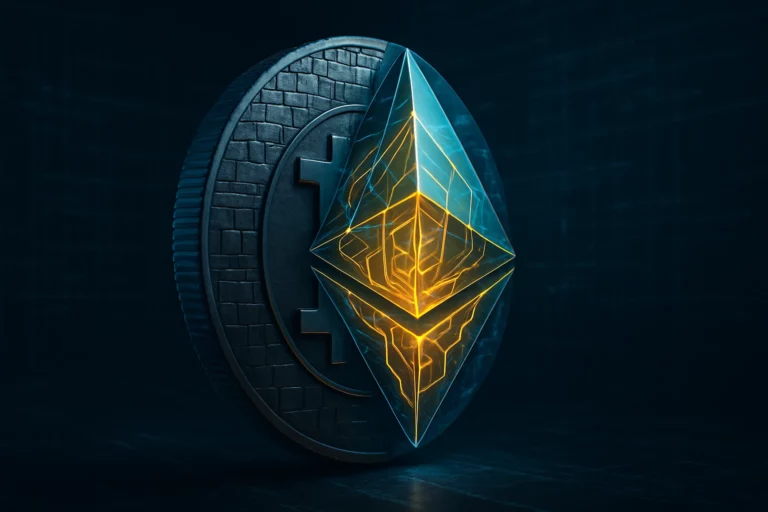
Quantum computers can use Shor’s quantum algorithm (Shor’s algorithm) created by mathematician Peter Shor in 1994. It can break the perceived security of algorithms in asymmetric cryptography, quickly solve the elliptic curve discrete logarithm problem, reverse the private key from the public address, forge transaction signatures and transfer assets.
Security researcher David Carvalho has warned that progress in quantum hardware may be "much faster than imagined." If the speculation comes true, Bitcoin’s current defense line will be like an old safe, useless in the face of new thieves who come with their own master keys.
In order to combat quantum threats, the research focus is turning to quantum-resistant cryptography (PQC). The National Institute of Standards and Technology (NIST) has adopted algorithms such as CRYSTALS-Dilithium as next-generation standards. The industry is also evaluating hybrid signature solutions to allow traditional and PQC to coexist and reduce the risk of one-time switching. Therefore, the concept of cryptographic agility has received attention. Through modular design, nodes can quickly change algorithms according to the situation in the future.
However, the size of PQC signatures is generally larger, about 5 to 50 times the current size, which means that the volume of transaction data and handling fees will grow simultaneously, and the burden on node storage and bandwidth will also increase. How to strike a balance between security and efficiency has become a new question for developers.
Timeline and governance issues
There are significant differences within the community as to whether the quantum threat is imminent. Blockstream CEO Adam Back used to believe that quantum computers are "difficult to implement" at this stage, and Jan3 founder Samson Mow also emphasized that "other systems will break first" before Bitcoin falls. However, once Bitcoin needs to be upgraded, it must be completed through a hard fork. Past experience shows that hard forks are often accompanied by the risk of conflicting ideas and chain splits, and the cost of governance cannot be underestimated.
Based on technical analysis, the development team must first propose a clear path, including testnet verification, comparison of soft and hard fork plans, and a multi-stage transition mechanism. Otherwise, when quantum computing is truly implemented, the community may miss the golden defense window due to disagreements.
The race has begun
Countries such as El Salvador have tried to transfer part of their national Bitcoin reserves to custody solutions that support PQC, showing that prevention is becoming a consensus. The industry is also considering incorporating NIST standard algorithms into wallets and signature hardware, or using multiple signatures to protect high-value addresses first. Once the PQC algorithm matures, miners, exchanges and node software need to be upgraded simultaneously to maintain the overall consistency of the network.
From technological innovation to governance decisions, Bitcoin is facing unprecedented stress tests. Whether the quantum wave will hit the shore in five years is still uncertain, but "preparing for a rainy day" has replaced "unfounded worries" as the mainstream view. The warning from the founder of Solana is like a countdown timer, reminding developers, miners and currency holders: quantum threats will not wait for consensus to take shape. The earlier you act, the lower the cost.
In conclusion, if Bitcoin wants to maintain its status as "digital gold," it must lay out both technology and governance to create a security architecture that can be upgraded at any time. Facing the new competition brought about by quantum computing, the encryption world has no room for retreat and can only sprint with all its strength.